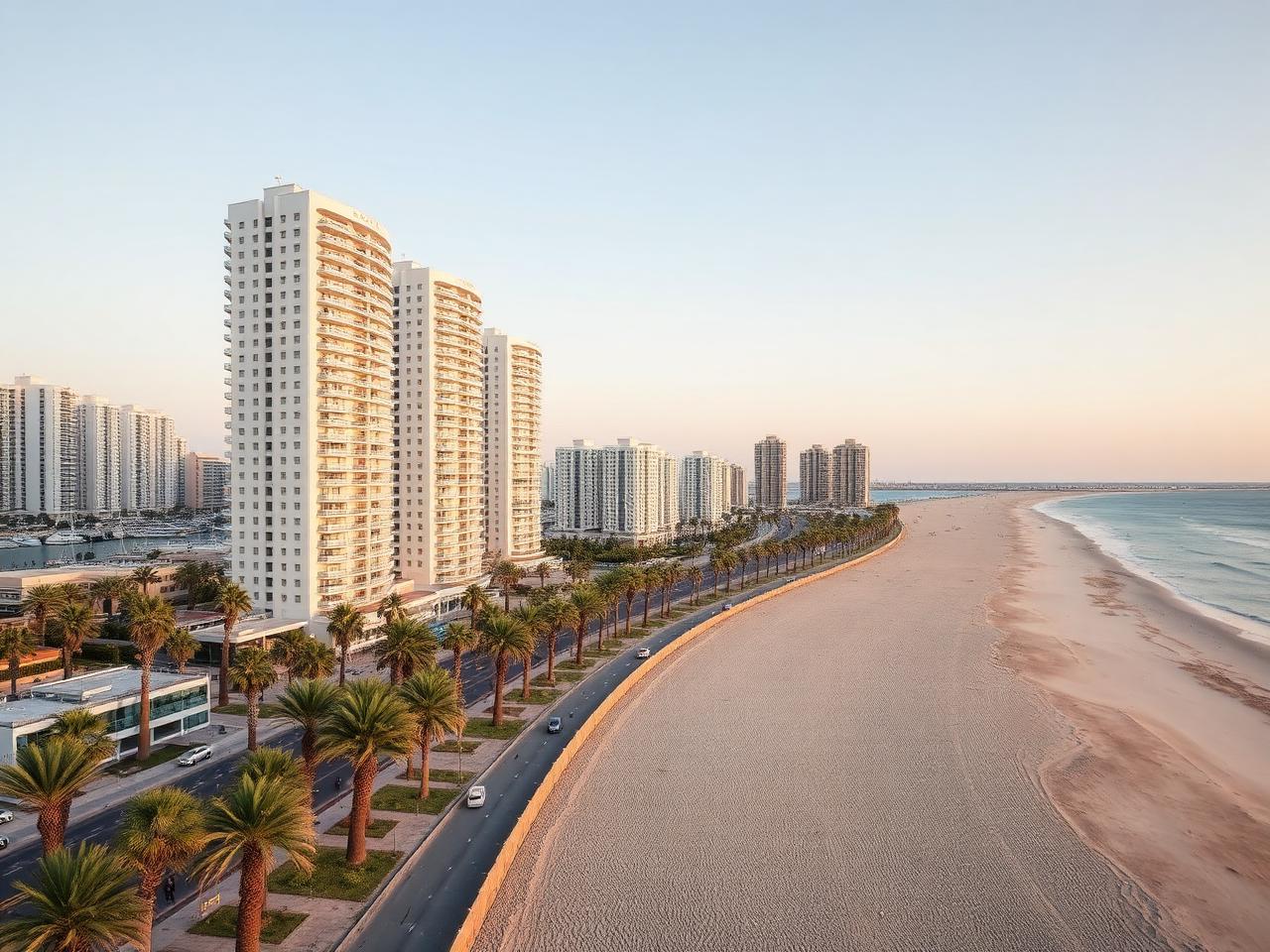
Buying an Apartment in Ashdod: The Complete Guide
Ashdod has become one of the most sought-after residential destinations in southern Israel. Its seafront, 17 distinct neighborhoods (Rova’im), proximity to Tel Aviv and quality of life attract families, olim and investors — particularly from the French-speaking community.
But buying in Ashdod is not improvised. Price gaps between two adjacent neighborhoods can exceed 30%, not all developers are financially solid, the Tabu registration of some buildings is still incomplete, and foreign buyers must navigate a tax framework (Mas Rechisha) that is often misunderstood.
This guide consolidates the method we have used at Nadlan Identity for years to help our clients buy at the right price, in the right neighborhood, with the right legal and financial structure. It covers neighborhood mapping, process, real costs, financing, pitfalls, negotiation, and the verifications required before signing.
Why buy in Ashdod in 2026
Ashdod combines what few Israeli cities offer simultaneously: an 8+ km beach, prices still 30 to 50% below greater Tel Aviv, a deeply rooted French-speaking community, and a full infrastructure of schools, healthcare and religious institutions.
Ashdod port, the country’s largest, sustains stable economic activity and supports rental demand. The direct train line to Tel Aviv places the business district 30 minutes away, making it as much a commuter city as a residential one.
For an owner-occupier, it offers superior quality of life at a controlled cost. For an investor, it offers a liquid market with reliable tenants and structural value growth driven by urban renewal programs (Tama 38, pinui-binui, new northern district).
Our conviction: Ashdod is not compared to itself. It is compared to Tel Aviv, Netanya, Bat Yam. On that comparative basis, its price-to-sea-to-French-speaking ratio remains one of the strongest in Israel.
Mapping the 17 neighborhoods (Rova’im)
Ashdod is divided into 17 numbered districts, each with its own identity, demographics and price level. This segmentation is unique in Israel and entirely conditions your purchase.
Rova Yud Alef (Rova 11), facing the sea, concentrates high-end new developments, recent towers and the majority of affluent French-speaking buyers. Price per sqm often exceeds NIS 30,000 in premium projects.
Rova Yud Bet (Rova 12), quieter and more residential, is highly sought after by religious-Zionist French-speaking families. Rova Tet (Rova 9) is central, mixed, with excellent value. The Marina, a gated enclave by the yacht port, is the ultra-premium segment.
At the other end, the historic Rova’im 1, 2 and 3 offer the most accessible prices but require careful building analysis (condition, condominium, planned Tama works). Rova 7 is haredi, Rova 10 is highly sought after by young couples.
Price per sqm by neighborhood in 2026
Prices in Ashdod today range from NIS 18,000 per sqm in historic Rova’im to over NIS 38,000 per sqm in new sea-facing developments in Rova 11 or the Marina. These gaps reflect building age, floor level, sea exposure and condominium quality.
For a 4-room apartment (90 sqm) at standard quality, expect between NIS 1.8 million in a renovated historic Rova and NIS 3.5 million in a well-located new project. A sea-view penthouse can exceed NIS 6 million.
Beware of raw comparisons: the 'commercial' sqm in a new project often includes balcony, terrace and common areas pro-rata. The real net habitable sqm can be 15 to 20% lower. Always request the detailed breakdown.
Our method at Nadlan Identity is to compare a property not to the global market but to three actually closed transactions in the same building or two neighboring buildings over the past 12 months (official Rashut HaMisim data).
The buying process, step by step
Buying in Ashdod follows the standard Israeli process with local specifics. Step 1: define the project (budget, neighborhood, type, time horizon). Step 2: targeted viewings and comparative analysis. Step 3: written offer and negotiation. Step 4: signing the Zikhron Devarim (memorandum) — to be avoided without a lawyer.
Step 5: legal verifications by your lawyer (Tabu, mortgages, easements, urban planning, condominium, Arnona municipal debts). Step 6: signing the Heskem Mekher (sale contract) — typically with a 10 to 15% deposit.
Step 7: tax filing within 30 days and payment of Mas Rechisha. Step 8: staged payments per negotiated schedule. Step 9: handover and Tabu registration (can take several months).
Average timeline between accepted offer and handover on an existing property is 3 to 6 months. On a new development, expect 24 to 36 months depending on construction stage.
Real total cost: beyond the headline price
The headline price never represents the true cost. In Ashdod, plan for 8 to 12% in additional costs depending on your profile. The main item is Mas Rechisha (purchase tax): 8% for a foreign resident or a second home, progressive scale for a resident on first acquisition.
Lawyer fees range from 0.5 to 1.5% + VAT depending on complexity. Add 17% VAT. Agency fees are typically 2% + VAT on the buyer side (negotiable on new developments).
Add Tabu fees (a few hundred shekels), bank mortgage fees (origination, appraisal, insurance), optional but usually worthwhile mortgage broker fees, and the first year of home and life insurance.
For an apartment at NIS 2.5 million bought by a foreigner, the real total cost lands around NIS 2.76 million. Always integrate this delta when setting your initial budget.
Mortgage: what Ashdod banks accept
Israeli banks finance up to 75% of the price for a resident on first acquisition, 50% for a second acquisition, and 50% for a non-resident. The maximum LTV is a Bank of Israel regulatory cap, non-negotiable.
The file must demonstrate net repayment capacity: total monthly credit payments must not exceed roughly 40% of net monthly income. For non-residents, banks require documented income, 6 to 12 months of bank statements, and sometimes Israeli guarantees.
Israeli mortgages are built as a 'mix' of tranches: fixed non-indexed (kalats), fixed CPI-indexed, variable Prime, variable indexed. The right mix depends on your horizon, inflation tolerance and current rates.
For a foreigner buying in Ashdod, we systematically recommend an independent mortgage broker: total cost gaps between two bank offers over 25 years can exceed NIS 200,000.
12 pitfalls specific to Ashdod
- 01Buying off-plan without verifying the developer’s financial strength and the bank guarantee (Heskem Liova).
- 02Signing a Zikhron Devarim 'to reserve' without a lawyer: legally binding and often unfavorable.
- 03Confusing 'commercial' sqm and 'net habitable' sqm on a new development.
- 04Failing to verify condominium debts (Vaad Bayit) before signing.
- 05Buying in Rova 11 sea-facing without checking construction horizon on adjacent plots.
- 06Underestimating noise on streets parallel to the sea (wind, rain, gulls).
- 07Buying an apartment still in a Hevra Meshakenet without personal Tabu, without a clear transfer clause.
- 08Negotiating only the price without negotiating the payment schedule (often worth 1 to 2% of real price).
- 09Ignoring Tama 38 / pinui-binui works planned on the street (noise + valuation impact).
- 10Underestimating Mas Rechisha as a foreigner or second-home owner.
- 11Choosing a lawyer recommended by the seller or seller’s agent — always retain your own.
- 12Failing to request a detailed building report (roof waterproofing, parking, elevators, facade).
How to actually negotiate in Ashdod
Negotiation in Ashdod is not folklore: it averages 4 to 8% off the asking price on existing properties, and 2 to 4% on new developments (often as 'gifts': kitchen, AC, parking spots).
Our method relies on three levers. First lever: data. Present the seller with the last three comparable closed transactions in the building or street, sourced from the Rashut HaMisim registry. This shifts an emotional negotiation into a factual discussion.
Second lever: timing. A buyer able to sign quickly with a serious deposit has greater leverage than a buyer whose mortgage is not pre-approved. Always arrive with a bank preliminary approval letter.
Third lever: terms. Rather than negotiating only the price, negotiate Tabu fees coverage, furniture removal, post-handover guarantee on new builds, or a staged schedule that reduces your carry cost.
Buying in Ashdod as a foreigner or olé
Ashdod is one of Israel’s most accessible markets for foreign buyers, particularly French-speaking. No legal restriction prevents a foreigner from buying, provided you respect the tax framework (Mas Rechisha 8%) and bank rules (50% maximum LTV).
For an olé hadash (new resident) within the first 7 years of aliyah, the Mas Rechisha scale is very favorable on first acquisition: reduced brackets, first tier exempt. This status can represent NIS 60,000 to 120,000 in savings on a NIS 2.5 million purchase.
Timing matters: it is often strategically smarter to buy within the 12 months following aliyah rather than before, to benefit from the olé scale. A tax lawyer must validate your situation before signing.
On FX: payments are made in shekels. Anticipating EUR/ILS or USD/ILS hedging via your bank or a specialized provider can secure 2 to 5% of total cost on a 24-month project.
10 mandatory verifications before signing
- 01Up-to-date Tabu extract (Nesach Tabu) of the property and parcel.
- 02Status of mortgages, seizures, oppositions and registered easements.
- 03Active urban plans (Tochnit Binyan Arim — TBA) and residual building rights.
- 04Municipal certificate (Tofes 4) confirming compliant delivery and network connection.
- 05Status of municipal debts (Arnona) and condominium debts (Vaad Bayit).
- 06Minutes of the last 3 condominium meetings and forward budget.
- 07Status of Tama 38 / pinui-binui works voted or in progress in the building or street.
- 08For new developments: bank guarantee Heskem Liova, developer accreditation, contractual timeline.
- 09Informal technical inspection by a mehandes (engineer) on properties over 25 years old.
- 10Verification of the chain of ownership over 15 years and any pending donation/inheritance.
Frequently asked questions — buying in Ashdod
Which Ashdod neighborhood for a French-speaking family?+
Rova’im 11, 12 and 9 concentrate the French-speaking community, with adapted schools, synagogues and shops. Rova 11 is upmarket and sea-facing, 12 is quieter and residential, 9 is more central and affordable. The choice depends on your budget, religious profile and need for school proximity.
What is the minimum budget to buy in Ashdod in 2026?+
A 3-room older apartment in a historic Rova starts around NIS 1.4 million. A 4-room family apartment in a sought-after district starts around NIS 2 million. A well-located new development starts around NIS 2.5 million for a 4-room, and a sea-view apartment exceeds NIS 3 million.
What does the purchase actually cost with all fees included?+
Expect 8 to 12% in fees on top of the headline price: Mas Rechisha (status-dependent), lawyer (1%), agency (2%), VAT, mortgage bank fees, and Tabu fees. A foreigner buying at NIS 2.5 million should plan for a total cost around NIS 2.76 million.
New build or older property in Ashdod?+
New offers builder guarantees, modern seismic standards and current finishes, but costs 25 to 40% more per sqm and means waiting 24 to 36 months. Renovated older properties offer better prices, often better locations and immediate rental income. The right choice depends on your horizon and tolerance for delay.
What rental yield can I expect in Ashdod?+
Gross yields in Ashdod range from 3.5% to 5% depending on the neighborhood. Central and popular Rova’im (1, 2, 3, 9) deliver the highest gross yields. Premium Rova’im (11, Marina) offer lower yields but stronger long-term capital appreciation.
How long does an Ashdod purchase take from start to finish?+
From the first viewing to the handover on an existing property, expect 3 to 6 months. On a new development, add 18 to 36 months depending on construction stage. Final personal Tabu registration can take a few additional months after handover.
Summary: buying in Ashdod with method
Buying in Ashdod in 2026 remains one of the most solid real estate decisions in the Israeli market — provided you arrive prepared. The right neighborhood, the right price per sqm against local references, the right tax structure, the right financing and an independent lawyer are the five pillars of a successful purchase.
Our conviction at Nadlan Identity: the quality of a purchase is not measured on signing day but five years later, when you compare your entry price with closed transactions in your street, neighborhood and building. That five-year snapshot must guide today’s decision.
If you are considering a purchase in Ashdod, request an independent analysis from us: price, neighborhood, watch points and negotiation margins. It is free and without commitment.
Get an independent analysis of your Ashdod project
Our team analyzes the price, neighborhood, watch points and negotiation margins for you, before you sign anything.
Get a free analysis- → Ultimate guide — buying in Israel
- → How to get an Israeli mortgage (Mashkanta)
- → Complete guide to the Israeli Tabu
- → Mas Rechisha: Israel's property purchase tax
- → Mas Shevach: Israel's capital gains tax
- → Foreigners buying property in Israel
- → Heskem Mekher: the Israeli purchase contract
- → Tama 38 & Pinui Binui: Israeli urban renewal
- → Rental property investment in Israel